
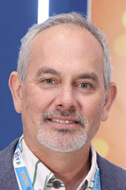
By Kalani Lukela Raphael, MD, MS
I remember the day Dr. Kekuni Blaisdell took me into a hemodialysis clinic in Honolulu nearly 30 years ago. I was a first-year medical student at the University of Hawaiʻi at Mānoa John A. Burns School of Medicine.
He asked, “Kalani, what do you see?”
I saw dialysis machines with bright, intimidating displays, blood flowing through plastic tubes, and filters doing what kidneys could no longer do.
“Everyone on dialysis is Kānaka Maoli,” I replied.
He raised his eyebrows slightly. “Yes,” he said, “and what will you do about it?”
Those words have stayed with me ever since.

My path led me to the University of Utah for residency training. I had left Hawaiʻi intending to return home, but in Utah I encountered Native Hawaiians, Tongans, Samoans, and other Pacific Islanders with kidney disease, just as I had in Hawaiʻi.
I decided to become a nephrologist, a specialist in kidney health, because of these experiences.
It was as if Dr. Blaisdell saw my future.
I built a career as a doctor, scientist, and educator at the University of Utah. Academia has allowed me to bring national attention to kidney disease disparities affecting Pacific communities.
With community support, my colleagues and I are conducting the Utah Pacific Islander Diabetes Study to better understand the drivers of diabetes and kidney disease in our lāhui and in other Pacific peoples. We hope this work will lead to more targeted treatments and approaches to close these health gaps.
But there is so much more to do. Breast cancer, heart disease, maternal health, and other conditions need attention. We need more Pacific Islander providers on the front lines of care and in research to close health gaps.
To help build that future, my colleagues and I created Haumāna ʻo Pasifika, a summer research internship for ʻōpio interested in careers in health and research with a commitment to lawelawe (serve) Pacific communities.
Since 2023, we have trained and mentored nearly 50 students from Hawaiʻi, Guam, Saipan, Tonga, American Samoa, and from across the continental United States. Many have gone on to pursue higher education in medicine, nursing, and dentistry and will become our future healthcare providers.
There are others doing important hana (work) on the continent in service to our lāhui here and back home. It is still hard to leave Hawaiʻi when I return home. The pull to return permanently remains strong. But I have not yet returned. There are Kānaka Maoli on the continent who need support. I am one of them.
“This is what I’m doing about it, Kekuni.”
Born and raised in Honolulu, Dr. Kalani Lukela Raphael is an adult nephrologist and professor of Internal Medicine at the University of Utah. His research focuses on chronic kidney disease and Native Hawaiian and Pacific Islander health. He also co-leads the Center for Pacific Islander Veterans Health and the Haumāna ʻo Pasifika undergraduate research program.


