By Kawai Hong
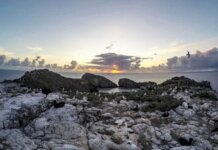
This past August, I had the privilege of joining the Papahānaumokuākea Marine Debris Project on their second marine debris mission of 2026. Those who have had the honor of visiting our kūpuna islands know it’s a life-changing experience.
Crossing into Pō may seem like simply crossing the vastness of the ocean, but the change is apparent. You feel the mana coming from our kūpuna, those who have been here before us and guided us to this special place.
Crossing Ke Ala Polohiwa a Kāne was something you can never prepare for. As I offered my hoʻokupu to this space and sat to kilo, I noticed the clouds change, wind on my skin, and the sun beaming down, until that change was felt internally.
Privilege is a word I have often used to describe my experience in Pō. It is a privilege to experience Papahānaumokuākea, to be healthy and able to do the work that we do, but it is also a privilege to be a Kanaka ʻŌiwi in a place that reminds us of who we are, where we come from, and the kuleana we have to our keiki to come.
The work itself was physically demanding and deeply rewarding. Day after day, our teams swam through reefs, scoured shorelines, and searched for marine debris that had become entangled across these fragile ecosystems.
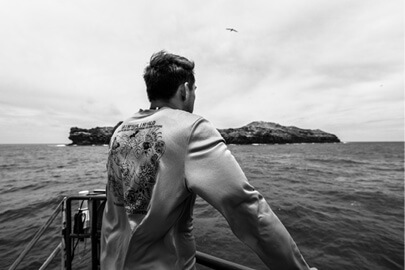
– Photo: Andrew Sullivan-Haskins
We removed thousands of pounds of nets, lines, and plastic debris, knowing that every piece we pulled was one less threat to the life that calls Papahānaumokuākea home. While the work can be exhausting, there is something fulfilling about knowing the mana we poured into these islands and atolls is directly helping protect such a sacred place.
As a kanaka lawaiʻa, seeing the quantity of fishing nets and gear across the reefs was something that stayed with me.
I have spent much of my life in the ocean, learning the interconnectedness between lawaiʻa, iʻa, and the pae ʻāina. So to see nets draped across the koʻa where schools of fish should be thriving was difficult to process. Fishing is a way of life that carries its own kuleana, and seeing the impacts of lost or abandoned gear was a powerful reminder that our actions in the ocean can reach far beyond the moment we are in.
Being a kanaka lawaiʻa is not only about knowing how to fish, but preserving and protecting the resources that we depend on. It is also our kuleana to ensure our keiki not only inherit a healthy ocean, but the practices and ʻike that have guided our pilina to Kanaloa. After all, the best lawaiʻa are also the best conservationists.
Days of swimming, hours of walking along the shores, and thousands of pounds of marine debris removed later, there are many ways I could express my time in Pō. Yet, from seeing schools of giant ulua to thousands of weke, each interaction with Papahānaumokuākea reminds me of what it means to live in Hawaiʻi: the shared kuleana to mālama our place, people, and culture.
Because here, to care for our ʻāina is to care for one another. It is, and always will be, a kākou thing.
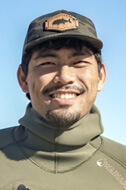
Kawai Hong was born and raised in Kaimukī and is a passionate kanaka lawaiʻa and conservationist. He is a true island boy at heart, fishing and diving while also working to promote the consumption of invasive reef fish as sustainable food. Currently, he works for Mālama Maunalua as their Fisheries Management Area coordinator.