
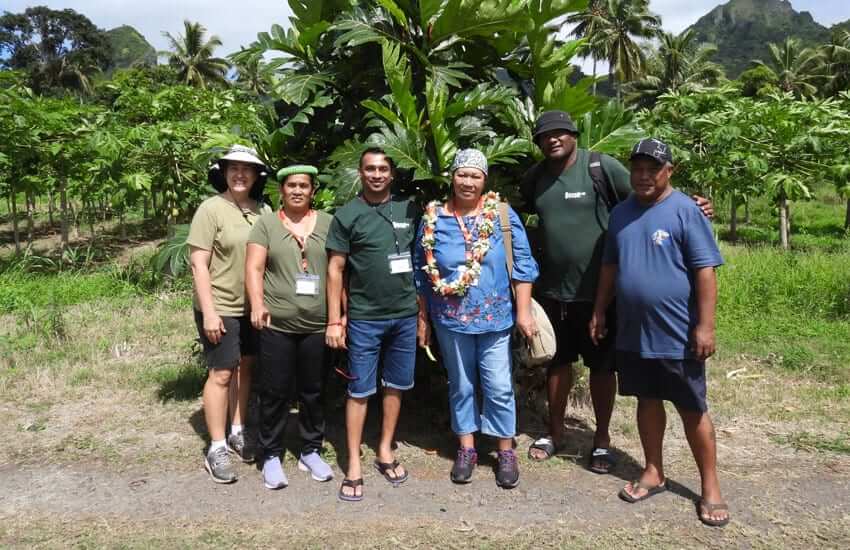
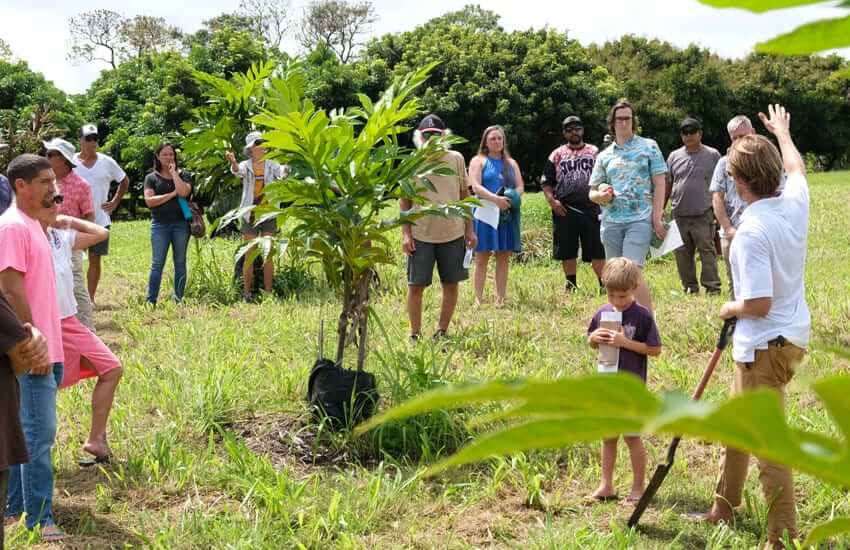
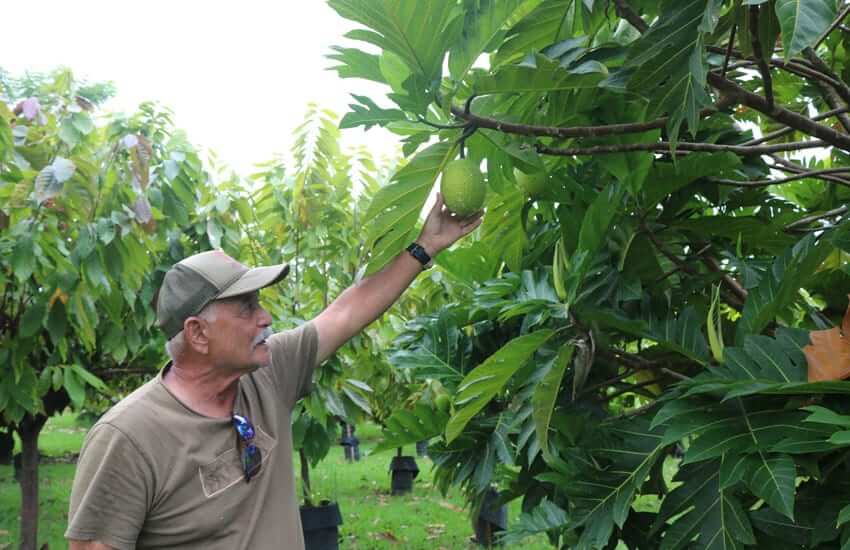

The 2026 Breadfruit Celebration, proudly supported by the Office of Hawaiian Affairs, was a week-long international gathering centered on ʻulu and its importance to culture, community, agriculture and food security. Through cultural gatherings, educational sessions, culinary experiences and farm excursions, participants explored the history of ʻulu while sharing knowledge and approaches from breadfruit- growing communities around the world.
Held September 19-25 in Kailua-Kona and South Kona, the celebration brought together cultural practitioners, farmers, researchers, educators, chefs, entrepreneurs and community members from Hawaiʻi, the Pacific, the Caribbean and other tropical regions.
Kona provided a meaningful setting for the gathering. The region was once home to a vast kaluʻulu, or breadfruit agroforestry system, that stretched across nearly 10 contiguous square miles. This carefully managed landscape had the capacity to produce approximately 35 million pounds of ʻulu annually, enough to meet the carbohydrate needs of an estimated 175,000 people.
The scale of the kaluʻulu reflects the knowledge and ingenuity of Native Hawaiian farmers who cultivated abundant food systems grounded in careful observation, adaptation and stewardship of ʻāina.
Today, ʻulu continues to offer pathways toward greater food security, healthier communities and economic opportunity.
The long-lived tree can produce food for decades and thrive within diversified agroforestry systems that support healthy soil, conserve water, create habitat and strengthen resilience.
A week of learning and celebration
The celebration began September 19 with the ʻUlu Festival at the Amy B.H. Greenwell Ethnobotanical Garden in South Kona.
The community festival featured cooking demonstrations, production workshops, traditional crafts and activities for keiki. The ethnobotanical garden previously hosted breadfruit festivals in 2011 and 2012 that drew thousands of attendees and helped build momentum for Hawaiʻi’s modern ʻulu industry.
On September 20 and 21, ʻAha ʻUlu provided a dedicated space for cultural practitioners to share knowledge, perspectives and concerns from an Indigenous point of view. By centering practitioners, the gathering recognized that the future of ʻulu cannot be separated from the people, practices and places that have sustained breadfruit across Oceania and other tropical regions.
The Global Breadfruit Summit was held September 22-24 at the Outrigger Kona Resort and Spa. This international conference explored breadfruit history and diversity, propagation, education, product development, agroforestry, nutrition, food security and climate resilience.
Participants shared research, cultural knowledge and community-led approaches to cultivating, conserving and using breadfruit in different environments around the world.
The summit also recognized elders whose foundational work helped advance the modern breadfruit movement. Keynote speakers included farmer and cultural practitioner Kaina Makua, James Beard Award-winning chef Robynne Maiʻi, and entrepreneur and professional bodyboarder Dave Hubbard.
An Edible Showcase on September 23 brought farmers, chefs and food producers together to highlight traditional and innovative uses of ʻulu. The celebration concluded September 25 with excursions exploring traditional agriculture, Hawaiʻi’s modern ʻulu industry, and tropical fruit production.
Growing abundance for future generations
ʻUlu is more than a versatile staple crop. Across Oceania and other tropical regions, breadfruit carries generations of knowledge connected to cultivation, harvesting, preparation, preservation and community stewardship.
Expanding its cultivation and use can help island and tropical communities strengthen local food production while creating opportunities in farming, processing, education, culinary arts and value-added products. In Hawaiʻi, it can help reduce dependence on imported food while ensuring that traditional crops and the ʻike surrounding them remain present in the lives of future generations.
By gathering in the landscape that once sustained Kona’s renowned kaluʻulu, participants honored what Native Hawaiian agriculture achieved in the past while exchanging knowledge that can help communities throughout the world cultivate abundance and resilience once again.
To learn more about the Breadfruit Celebration and the continuing work surrounding ʻulu visit: 2026celebration.breadfruitpeople.com.