
Pūlama Lānaʻi, which manages conservation initiatives, among other kuleana on the island, reported several rare native species sightings during Native Hawaiian Plant Month last April.
“It continues to remind us that it’s caring for the land as it cares for us, which is one of our company values” said Rachel Sprague, director of conservation at Pūlama Lānaʻi.
“Even though Lānaʻi is small with just a tiny fraction of its native habitat remaining, these native species are a reminder of the biocultural history of Hawaiʻi that is really what makes Hawaiʻi special. And so, finding and protecting Lānaʻi’s native species is sort of a way to honor its history and future.”
Sprague, who holds a Ph.D. in wildlife biology, and husband Jonathan Sprague, have led Pūlama Lānaʻi’s conservation programs since 2016.
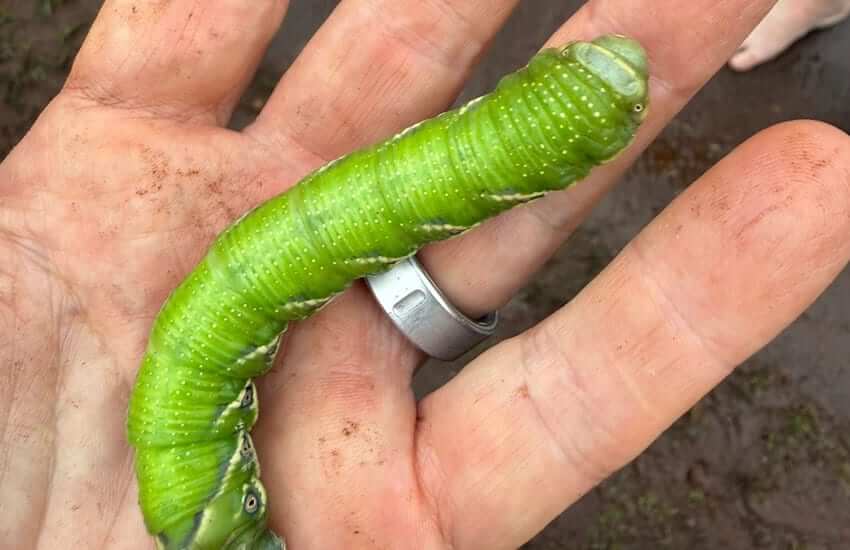
Last October, the conservation team joined forces with the U.S. Fish and Wildlife Service, the Department of Land and Natural Resources’ Division of Forestry and Wildlife, Maui Nui Plant Extinction Prevention Program (Maui Nui PEPP), and the community, to uncover a Blackburn’s Sphinx Moth, a federally endangered native insect once believed to be extinct in Hawaiʻi, along with native plants not seen on island since the 1930s.
She noted that a Lānaʻi resident discovered the species as a caterpillar on a sidewalk in town.
“[John and I] and the biologists we work with [tend to] know what we’re looking for and know what a lot of these species look like, so to still be surprised in a really good way is … gratifying. We’ve been looking for it for 10 years,” Sprague said.
“The Blackburn’s Sphinx’s spots look like a number of other species that have been introduced to Hawai’i from either the Mainland or South America. … Manduca quinquemaculata, (or the five-spotted hawkmoth) is the relative that looks the most [like] The Blackburn’s Sphinx.”
The State Entomologist and a University of Hawaiʻi professor confirmed the conservationists’ hypotheses, marking the second documented record of that species of moth on Lānaʻi since 2009.
According to Sprague, what was unique about this finding was the coordination between the community, Pūlama Lānaʻi’s conservation team and the U.S. Fish and Wildlife Service. They supported its development into an adult moth released it on the island into a “more suitable habitat.”
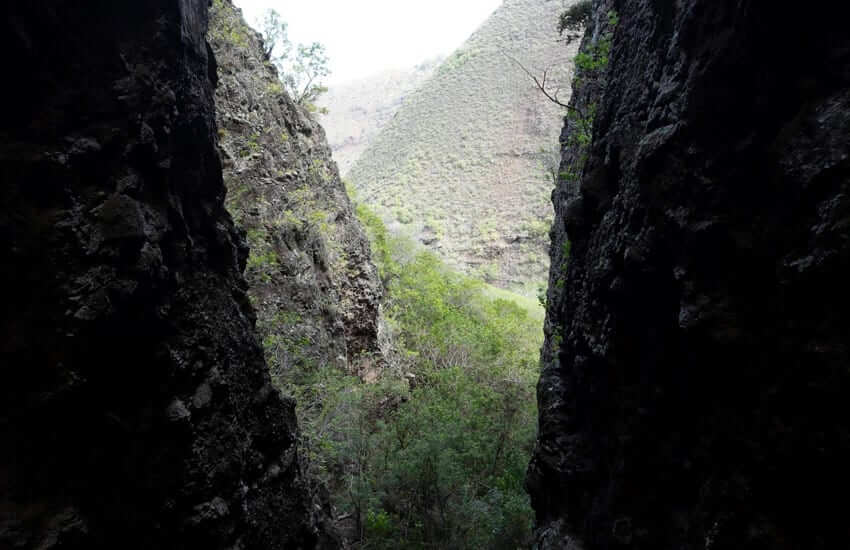
Regarding the recent native plant rediscoveries – Embelia pacifica, Peperomia tetraphylla, Schiedea menziesii and Cyperus phleiodes – that have not been seen on the island since the 1930s, she adds: “The difference with that trip was that they [Maui Nui PEPP] surveyed Maunalei Valley and some of the surrounding canyons and that was the first time I can recall the plant experts doing so with a drone. I think that contributed to why there were multiple species that were found … because no one had looked there.”
She noted that the rare plant program operates under permits from the state. Once a rare species is found, the team coordinates with the state on long-term monitoring to track its fruit or seeds and set up plans to propagate and protect it from animals, plants or other threats.
Sprague is currently overseeing a project to build a predator exclusion fence for Hawaiian petrels, or ʻuaʻu, seabirds endemic to Hawaiʻi, as well as creating a conservation area for the Orangeblack Hawaiian Damselfly.
“For me, it’s always exciting when we think about how much conservation work has been done here and across the state,” she said.
Maui Nui PEPP Coordinator Zach Pezzillo described finding multiple rare native species at one time as “an anomaly.” The unit is focused on protecting Hawaiian plant species with fewer than 50 individuals remaining in the wild across Maui, Molokaʻi, Lānaʻi and Kahoʻolawe.
For the last five years, Pezzillo has served as a “plant detective,” he said with a laugh. “Our job is to look for rare species. I spend a lot of time looking at maps and place names, adding to collections of western botanists working in the Islands since the 1800s.”
In addition to his team, he credits a drone for getting them access to the harder to reach spots on the cliff face beside a waterfall. “It’s a game changer. Drones have opened up so many doors for us.”
Maui-born Pezzillo recalled his first field visit to Lānaʻi.
“I had a very faint image of what the place was like, and it was so cool to come here and connect all of those glimpses. Despite the challenges the island is facing with the sheer abundance of weeds in the forest and the sheep and the deer, [it’s great] to see that these tiny pockets of forest are being protected.”
He said what stood out to him most while on Lānaʻi most recently was a vibrant green fern, or ʻiwaʻiwa. “It responds to the rain, grows in dry habitats overtaken by species, [and] is bright green. They are so resilient.”
Looking to make a difference in your own backyard?
Pezzillo says to consider volunteering with organizations that are already doing the work. “That community is incredible. You’ll meet like-minded people who want to be outdoors.”
That, and to find your local native plant nursery – each island has one – and plant in a pot or directly in your or a family member’s yard.
“Just getting out and continuing to make that connection with the species that make Hawaiʻi what it is. Starting somewhere is the best people can do.”
This article is reprinted with permission from “Aloha State Daily, the new news for Hawaiʻi.” Read more at alohastatedaily.com and sign up for its free daily edition email at alohastatedaily.com.
Pūlama Lānaʻi is funded by Larry Ellison. It functions as the land, resource and asset management company for his landholdings on Lānaʻi.